
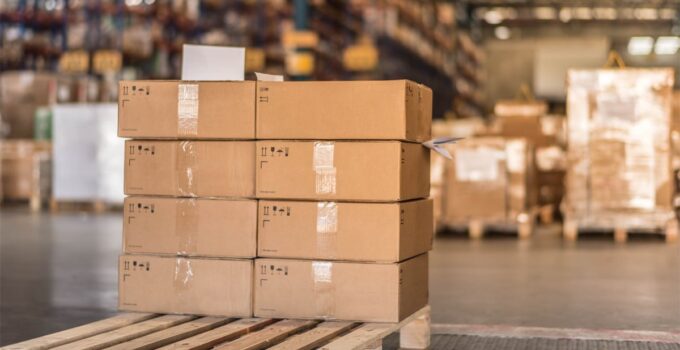
The humble shipping container and the cardboard box have long been the silent workhorses of global trade. For decades, the primary goal of international logistics was simple: move goods from point A to point B as quickly and cheaply as possible. However, the landscape of global commerce is shifting.
Driven by environmental urgency, technological leaps, and a tightening regulatory net, the way the world packages and transports goods is undergoing a fundamental transformation.
Businesses operating across borders are no longer just logistics managers; they are becoming stewards of data and sustainability. The focus has moved from merely protecting the product to protecting the planet and the bottom line simultaneously.
This evolution is reshaping supply chains, demanding a level of adaptability and insight that was previously unnecessary.
The Regulatory Squeeze and the Green Mandate

Source: sogreenpack.com
Perhaps the most immediate pressure on global supply chains comes from the rapid change in environmental legislation. The era of voluntary sustainability is ending, replaced by a complex framework of mandatory compliance.
Governments across Europe and the UK are implementing strict Extended Producer Responsibility (EPR) laws, which shift the cost of dealing with waste from the taxpayer to the producer.
This regulatory shift is forcing companies to audit their packaging flows with forensic detail. It is no longer enough to simply claim a package is recyclable; businesses must now prove it, track it, and often pay for its eventual recovery.
The UK’s Plastic Packaging Tax is a prime example of this trend, penalising packaging with less than 30% recycled content.
Consequently, supply chain directors are prioritising materials that are not just lighter but smarter.
The “right-sizing” of packaging—reducing the air shipped in boxes—has evolved from a cost-saving measure to a compliance necessity.
Shipping excess air not only wastes fuel but now potentially incurs higher tax liabilities if the packaging volume to product ratio is inefficient.
This drive for efficiency is pushing manufacturers toward innovative materials, such as mycelium-based composites and high-grade recycled polymers, which offer durability without the heavy carbon footprint of virgin plastics.
The Digitalisation of the Parcel
While physical materials are changing, the most profound shift is invisible. The integration of digital tools into packaging strategies is revolutionising how companies forecast and manage their inventory. In the past, packaging decisions were often made based on historical averages or gut instinct. Today, they are driven by real-time data.
Smart packaging, equipped with RFID tags and QR codes, allows for granular tracking of assets through the supply chain.
This transparency helps identify bottlenecks and breakage points that were previously invisible. However, the true value lies in the data aggregation. By analysing vast datasets regarding material usage and waste generation, companies can predict compliance risks before they become financial penalties.
This data-centric approach is critical for navigating the complex web of international packing trends, where differing regulations between countries can create significant friction. Industry leaders are increasingly turning to specialised compliance models and detailed reports to benchmark their sustainability performance against global standards.
Access to this high-level intelligence allows businesses to pivot quickly when regulations in key markets like the EU or Asia change, ensuring that their goods do not get stuck at the border due to non-compliant packaging.
The Return of the Reusable
Source: applia-europe.eu
For the last half-century, the global economy has been linear: take, make, waste. The logistics sector is now attempting to bend this line into a circle.
The circular economy is moving from a buzzword to a practical operational model, particularly in the realm of business-to-business (B2B) logistics.
Reusable transport packaging (RTP)—such as durable crates, pallets, and totes—is gaining traction over single-use alternatives. While the upfront investment for RTP is higher, the long-term savings and carbon reduction are undeniable. The challenge has always been the “reverse logistics,” or getting the empty crate back to the start of the loop efficiently.
Here again, technology plays a pivotal role. Improved tracking systems ensure that reusable assets do not vanish into the supply chain “black hole.”
Companies are establishing closed-loop systems where packaging is treated as an asset rather than trash.
This shift requires a collaborative mindset, with suppliers, logistics providers, and retailers working together to standardise containers and share the burden of reverse transport.
Future-Proofing the Supply Chain

Source: innovationforum.co.uk
The trajectory for the next decade is clear. Packaging will continue to become more regulated, more digital, and more circular.
The businesses that will thrive are those that view packaging not as a disposable commodity but as a strategic component of their brand and operations.
Ignoring these shifts is a risky strategy. Consumer awareness regarding “over-packaging” is at an all-time high, and “packaging shame” is a real phenomenon on social media that can damage brand reputation overnight.
Moreover, investors are increasingly scrutinising the Environmental, Social, and Governance (ESG) credentials of the companies they back.
A supply chain reliant on virgin plastics and inefficient loading practices is becoming a liability.
Success in this new era requires a willingness to invest in intelligence. It involves looking beyond the immediate cost of a cardboard box and understanding the lifecycle costs associated with that box—from the tax it incurs to the fuel it requires to transport.
By leveraging data and staying informed on global shifts, businesses can turn their packaging strategy from a logistical headache into a competitive advantage. The future of trade is not just about what is inside the box, but the intelligence that surrounds it.