
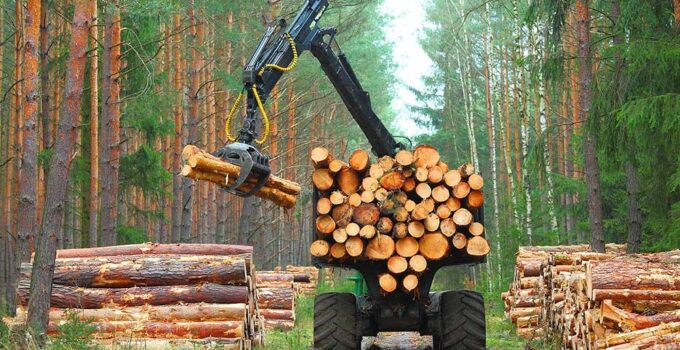
Forestry and the timber industry play an essential role in environmental stability and economic development.
Forest ecosystems absorb large quantities of carbon dioxide, support biodiversity, regulate climate, and provide renewable raw materials for society.
Timber production contributes significantly to construction, manufacturing, and energy sectors worldwide.
Traditional forest management depended heavily on manual labor, limited field surveys, and basic measurement tools. Technicians often conducted forest inventories by hand, relying on paper maps and ground-based observations.
Such approaches offered only partial data coverage and lower precision, especially across large or remote forest areas.
Modern innovation is rapidly transforming forest management practices. Advanced technologies now improve forest monitoring, timber production efficiency, and sustainability outcomes.
Digital tools support better decision-making, ecological protection, and long-term resource planning across forestry systems.
Advanced Digital Methods in Forest Resource Management

Source: etedge-insights.com
Remote sensing represents one of the greatest improvements in modern forest monitoring. Satellite-based systems make real-time observation possible, allowing forest health conditions to be assessed quickly and accurately.
Early warning signs of pest infestations, drought stress, and wildfire impacts can be identified through imagery interpretation.
Drone imagery also supports close-range monitoring of forest structure and ecological disturbance.
Key monitoring capabilities supported through remote sensing include:
- detection of illegal logging activity
- tracking forest cover change over time
- observation of biodiversity patterns
- identification of wildfire and storm damage zones
Geographic Information Systems, often referred to as GIS, provide detailed mapping and spatial analysis of forest ecosystems.
Soil quality, vegetation distribution, and wildlife habitat changes can be recorded across extended periods. Spatial planning improves decision-making for harvest scheduling, conservation zoning, and ecosystem protection efforts.
LiDAR technology delivers highly accurate three-dimensional mapping of forest structure. Tree height, canopy density, and biomass estimates can be measured with precision.
Forest inventory assessments become more reliable as LiDAR strengthens data accuracy for precision forestry planning.
Mobile and digital platforms improve communication and field data collection.
Forestry technicians now rely on tablets and mobile applications to access digital databases, upload measurements instantly, and update forest records in real time.
Faster reporting strengthens operational coordination and supports quicker responses to environmental threats.
Industry Innovation in Timber Production and Processing
Digital transformation is reshaping timber manufacturing and processing systems.
Digital twin technology creates virtual replicas of machinery and production workflows, allowing optimization through simulation and performance tracking.
Errors decline while resource efficiency improves under Industry 4.0 production models.
Sustainable innovation is advancing through biomass conversion technologies. Pyrolysis processes convert forest residues into environmentally sustainable materials, including green carbon and bioliquids.
Timber industry systems benefit through stronger contributions to climate-focused solutions.
Automation has improved precision and output in wood processing.
Robotics systems enhance cutting accuracy, strengthen quality control, and increase yields. Automated machinery supports faster production cycles while reducing material waste.
Machine learning models are also being applied in timber analysis.
Automated knot detection, defect identification, and grading assessments increase processing speed and improve consistency in manufacturing decisions.
For more on innovations in timber industry software, see innovations in timber industry software to explore how cloud-based ERP systems, IoT, AI-driven analytics, blockchain, and mobile apps are reshaping digital management across the timber value chain.
Practical Field Technologies Shaping Modern Forestry Work
Drones, also known as UAVs, have become essential tools for aerial forest surveying.
High-resolution images allow rapid assessment of tree health, storm impacts, and regeneration progress.
Large forest zones can now be surveyed efficiently without extensive ground travel, reducing both time and labor demands.
Remote sensing devices continue expanding forestry monitoring capacity at large scales.
Satellite and airborne sensors support wide-area observation of forest degradation, deforestation trends, and reforestation development.
Improved accuracy emerges when sensor-based monitoring complements ground-level data.
Precision forestry tools rely on detailed measurements to tailor forest management practices.
Harvest operations, thinning schedules, and conservation actions can be adjusted according to ecological needs, increasing operational efficiency while limiting negative impacts.
Modern forestry technicians now depend on advanced technical skill sets.
Digital dashboards, GIS mapping platforms, and remote sensing systems have replaced many manual surveying practices.
Field decision-making increasingly depends on analytics, technology use, and real-time information access.
Automation Systems Reshaping Forestry Operations
Source: saforestryonline.co.za
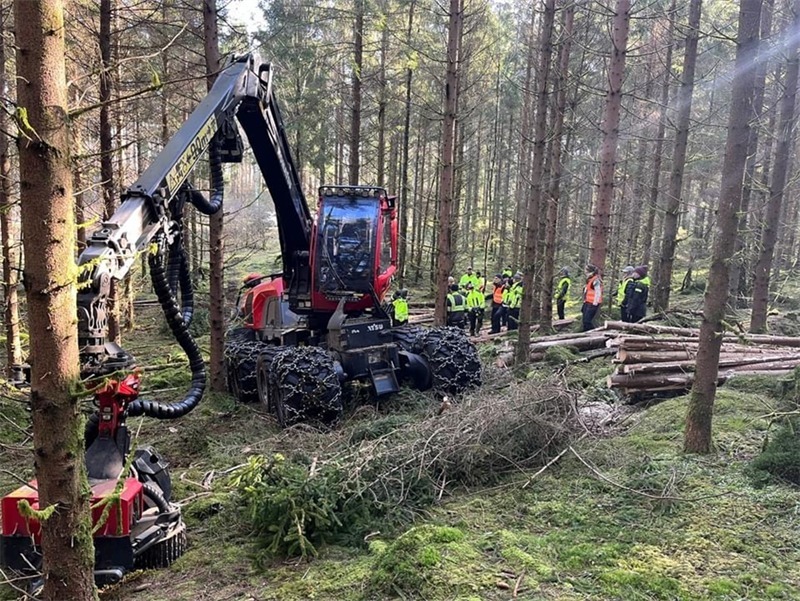
Automation has become increasingly common in forestry field activities.
Autonomous machines support reforestation, stand maintenance, and vegetation control while reducing physical labor requirements.
Efficiency improves while worker safety increases, especially in steep or hazardous terrain.
Satellite-linked automated monitoring systems provide continuous oversight of forest areas.
Integration with satellite imagery allows more precise resource management and enables rapid reaction to ecological disturbances.
Forest managers gain stronger control across large operational zones.
Artificial intelligence and predictive analytics strengthen ecological risk detection and improve field planning.
AI models can anticipate pest outbreaks, fire risk zones, and long-term forest decline patterns.
Predictive tools also support optimized harvesting logistics and scheduling decisions.
Advanced image and video analysis systems are emerging for forestry operations.
Machine learning applications can classify forestry machine activity and detect environmental patterns automatically.
Manual review time decreases, supporting faster evaluations and more accurate operational time studies.
Emerging automation applications include:
- robotic support for reforestation tasks
- predictive modeling for fire and pest risk
- satellite-integrated monitoring networks
- automated classification of machine operations
Technology Contributions to Conservation and Sustainability Goals
Improved monitoring of forest health supports stronger sustainability outcomes. Remote sensing data tracks vegetation change, ecosystem shifts, and long-term forest conditions.
Adaptive management becomes possible through continuous observation and updated ecological planning.
Collaborative digital platforms strengthen forest protection efforts. Community reporting applications augment monitoring systems and assist in illegal deforestation detection.
Broader public participation increases oversight capacity at the regional and international levels.
Advanced imagery tools combined with AI applications also strengthen biodiversity protection. Rare species habitats can be identified with greater accuracy, allowing targeted conservation measures and improved ecological restoration planning.
Digital tracking systems improve timber traceability throughout supply chains.
Transparent monitoring strengthens accountability and supports sustainability certification requirements, helping ensure responsible forest product markets.
Certification and traceability improvements are supported through:
- digital monitoring of timber movement
- transparent supply chain reporting
- stronger sustainability verification systems
Practical Gains and Real-World Barriers in Adoption
Source: bcg.com
Technological adoption offers significant advantages across forestry and timber systems.
Data accuracy improves, operational planning becomes more effective, and safety conditions improve for workers.
Efficiency gains support stronger yields while limiting waste during harvesting and processing.
Sustainable supply chains benefit through improved monitoring, accountability, and traceability.
Conservation outcomes improve while economic performance remains strong across responsible timber markets.
Challenges remain in widespread implementation. Infrastructure investments, training programs, and skilled workforce development are necessary for effective use of advanced technologies.
Integration complexity, data privacy concerns, and community acceptance issues must also be addressed carefully for long-term success.
Summary
Modern technology is fundamentally reshaping forestry and the timber industry.
Remote sensing, GIS, LiDAR, robotics, automation, and artificial intelligence are strengthening sustainability, operational efficiency, and conservation support.
Continued technological adoption will remain essential for meeting environmental goals and addressing global ecological challenges.
Forestry systems that invest in innovative tools will be better prepared to manage resources responsibly and sustain forest ecosystems into the future.